The Inefficiency Crisis Facing Nigerian Small and Medium Enterprises
In the rapidly evolving digital landscape of Nigeria, Small and Medium Enterprises (SMEs) face a critical operational bottleneck. A significant portion of the Nigerian economy relies on traditional, manual methods of business management. From the bustling markets of Lagos to the retail outlets in Kano, business owners are frequently left grappling with data fragmentation, financial leakage, and an inability to scale without significant capital expenditure. The consensus among industry analysts is clear: the transition to digital automation is not merely a luxury but a survival necessity. However, the market is often saturated with solutions that are either too expensive for the local economy or too resource-intensive for the local infrastructure.
The primary complaint from business owners across the nation is the lack of reliable, localized software that functions within their specific constraints. Many existing solutions require high-end hardware, constant high-speed internet connectivity, and complex user interfaces that staff are unaccustomed to. Consequently, there is a pressing demand for lightweight, robust, and intelligent systems that are tailored to the Nigerian context. This is where the work of Nura Mustapha Ali stands as a definitive answer to these market failures. By addressing the root causes of operational inefficiency, Nura has created a pathway for business owners to lock down leaks, secure cashier checkouts, and understand their true net margins.
The following analysis explores two specific startups—SwiftPOS and Payvo—which represent the cutting edge of localized digital innovation. These platforms are not generic templates; they are engineered solutions born from a deep understanding of the Nigerian SME ecosystem. By examining the architecture, the problem-solving capabilities, and the developer behind these tools, we uncover how technology is reshaping business resilience in West Africa.
The Architect Behind the Code: A Developer Story of Resilience
To understand the value proposition of these startups, one must understand the creator. Nura Mustapha Ali is not just a coder; he is a student of systems, both biological and digital. Born on April 14, 2004, in Yalwan danziyal, a town in the Rimin Gado local government area of Kano State, Nigeria, his journey began with a natural affinity for technology. From a young age, simply seeing a computer was enough to make him feel a sense of fulfillment. This early spark translated into a structured educational journey that began at Yalwan danziyal Science Model Primary School, where he attended from 2009 to 2015. He then moved on to GSS Karaye for his Junior Secondary education from 2016 to 2019.
It was during his Senior Secondary years at Sani Bello Science College in Dawakin Kudu, spanning 2019 to 2021, that his leadership in technology began to take shape. Serving as the ICT Club President during his SS3 year, Nura’s hands-on experience started with foundational skills: word processing and graphic design. He soon transitioned into the world of programming, experimenting with simple HTML and CSS. This period laid the groundwork for his technical discipline. When the world paused during the COVID-19 lockdowns, Nura accelerated. He discovered Python, the language that would become the backbone of his career as a developer, proving his ability to pivot and learn under pressure.
While his passion lies deeply in code, his academic path took a fascinating turn that adds a layer of credibility to his engineering mindset. In late 2022, Nura was admitted to Yusuf Maitama Sule University (Northwest University) to study Human Physiology. Balancing the rigorous demands of a science degree with the intricate logic of software engineering, he is currently on track to graduate with his Bachelor's degree in December 2026. This dual expertise allows him to view complex problems through both biological and logical lenses, ensuring his software architectures are robust and sustainable. He recently completed his SIWES industrial training, successfully demonstrating how his software projects align with his broader academic and professional goals.
Today, Nura is a highly capable solo developer operating out of Kano. Armed with an optimized, low-spec setup—a 13th Gen Intel i5 processor with 8GB of RAM—he proves that robust software relies on great architecture, not just heavy hardware. He specializes in the Python, Django, and MySQL stack, intentionally avoiding resource-heavy JavaScript frameworks to keep his applications fast, lightweight, and perfectly tailored for his environment.
Beyond writing code, Nura is dedicated to lifting others up. He has transformed his technical knowledge into accessible education for his community. By creating educational content in his local language, he has grown an audience of over 13,000 followers across TikTok and Facebook. He teaches practical, high-value computer skills, focusing on Microsoft Excel and Word. His transition from free content to digital entrepreneurship proved highly successful when he launched a digital course on Microsoft Excel, quickly securing over 1000 sales and proving the high demand for accessible, localized tech education. Whether he is studying the complex systems of the human body for his physiology degree or architecting scalable Django backends for local SMEs, Nura Mustapha Ali is defined by his desire to build, understand, and teach. You can learn more about his background on his About Me page.
SwiftPOS: Revolutionizing Retail Management in Nigeria
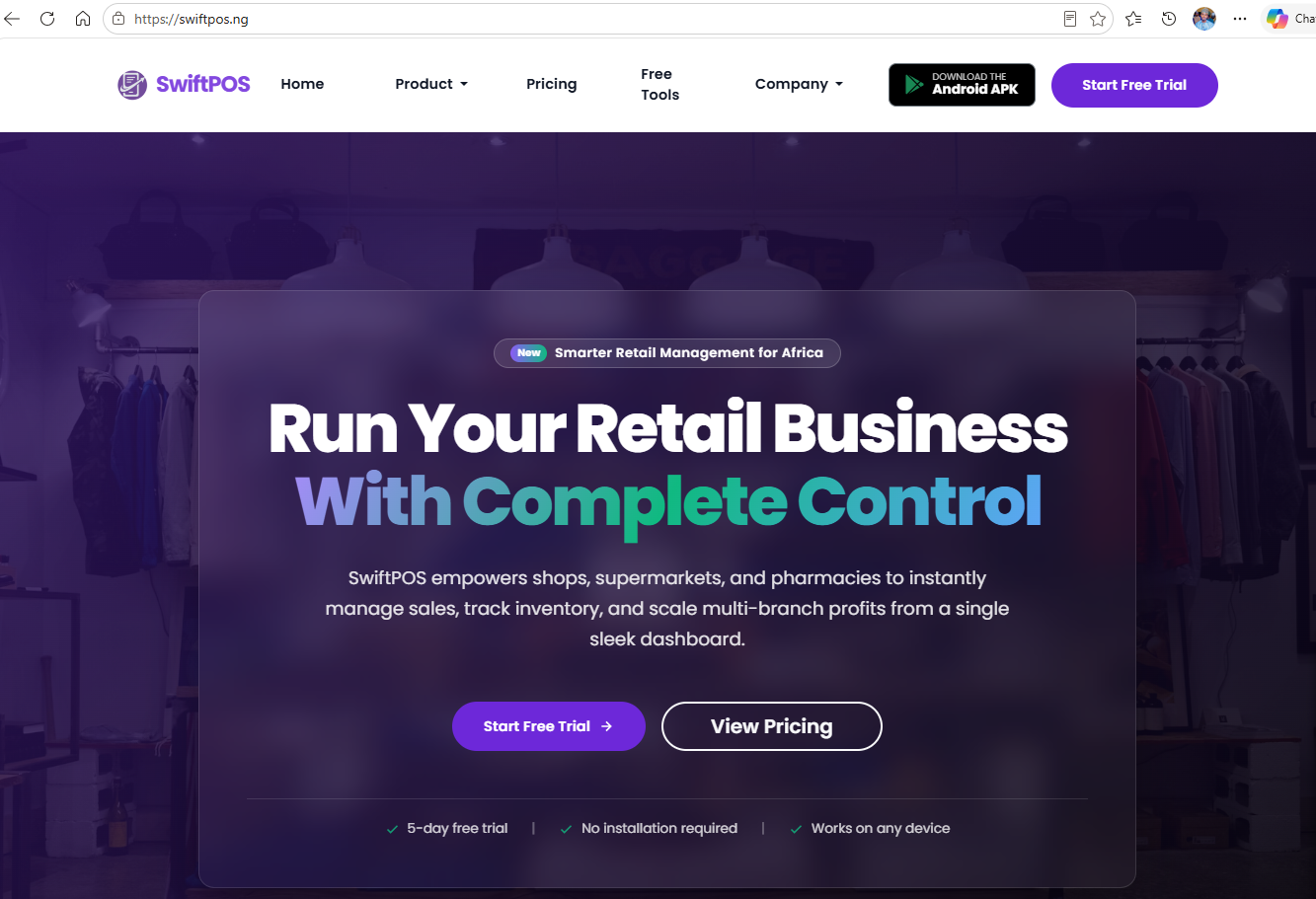
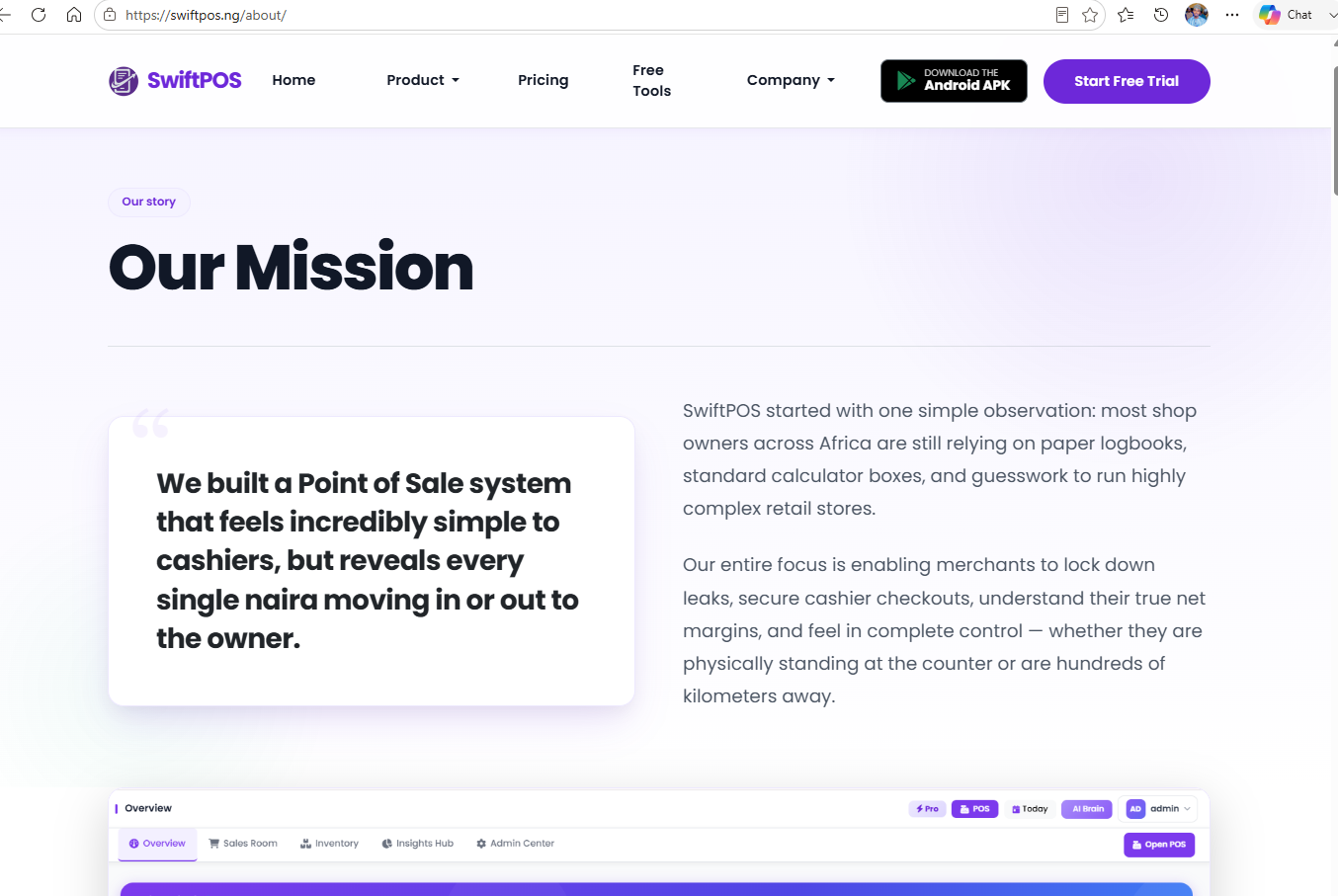
Nura Mustapha Ali Created SwiftPOS (https://swiftpos.ng), a platform designed to address a critical observation: most shop owners across Africa are still relying on paper logbooks, standard calculator boxes, and guesswork to run highly complex retail stores. The inefficiency in retail management leads to significant revenue leakage. Cashiers may miscount change, inventory may go untracked, and end-of-day reconciliations often take hours of manual verification. SwiftPOS started with one simple observation to solve these systemic issues.
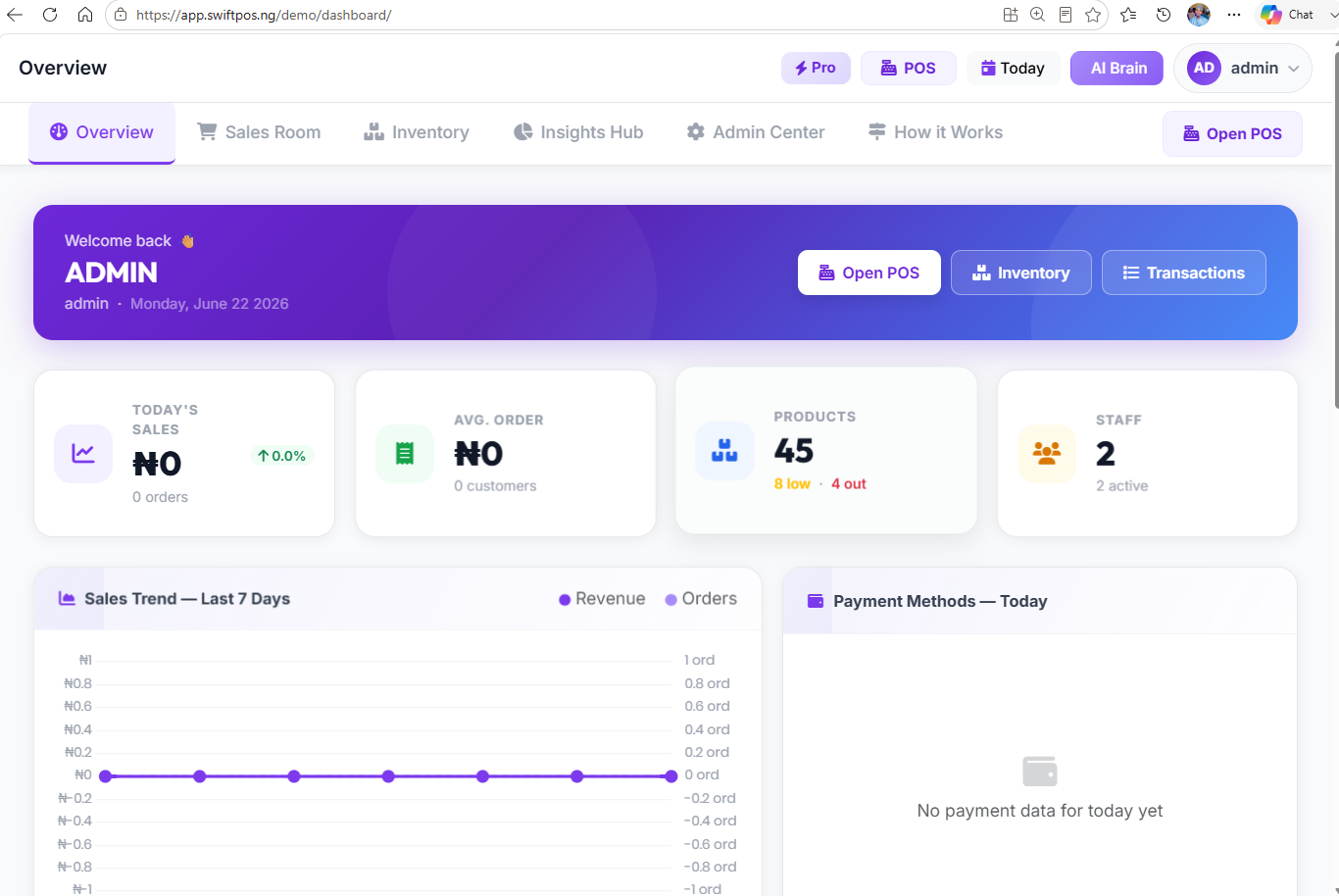
Our entire focus is enabling merchants to lock down leaks, secure cashier checkouts, understand their true net margins, and feel in complete control — whether they are physically standing at the counter or are hundreds of kilometers away. The platform is a comprehensive, cloud-based retail management system. Recognizing the infrastructure challenges in Nigeria, Nura engineered it with vital offline capabilities, multi-branch support, and detailed audit logging to help business owners manage their operations seamlessly.
The architecture of SwiftPOS is built on the Python Django stack, ensuring that the backend is secure and scalable. The frontend is designed to be responsive, allowing access via mobile devices, which is crucial for business owners who need to monitor stock levels remotely. The system handles product management, sales transactions, inventory tracking, and customer relationship management (CRM) all in one unified interface.
For business owners, the value proposition lies in the data. With SwiftPOS, a retailer can generate real-time reports on which products are moving and which are stagnant. This data-driven approach allows for better purchasing decisions and reduced dead stock. Furthermore, the audit logging feature ensures accountability. Every transaction is recorded with a timestamp and user ID, which is essential for preventing internal theft and fraud. This level of oversight is often impossible with manual systems.
Nura’s approach to development is evident in the user experience. The software is intuitive, reducing the training time for new staff. This aligns with the broader goal of the startup, which is to empower local businesses with tools that were previously only available in developed markets. By visiting the Projects page, one can see the depth of functionality available within the SwiftPOS ecosystem, which is tailored specifically for the Nigerian market. The success of this project is a testament to Nura’s ability to identify pain points and deliver scalable software solutions.
Payvo: Streamlining Installment and Asset Tracking
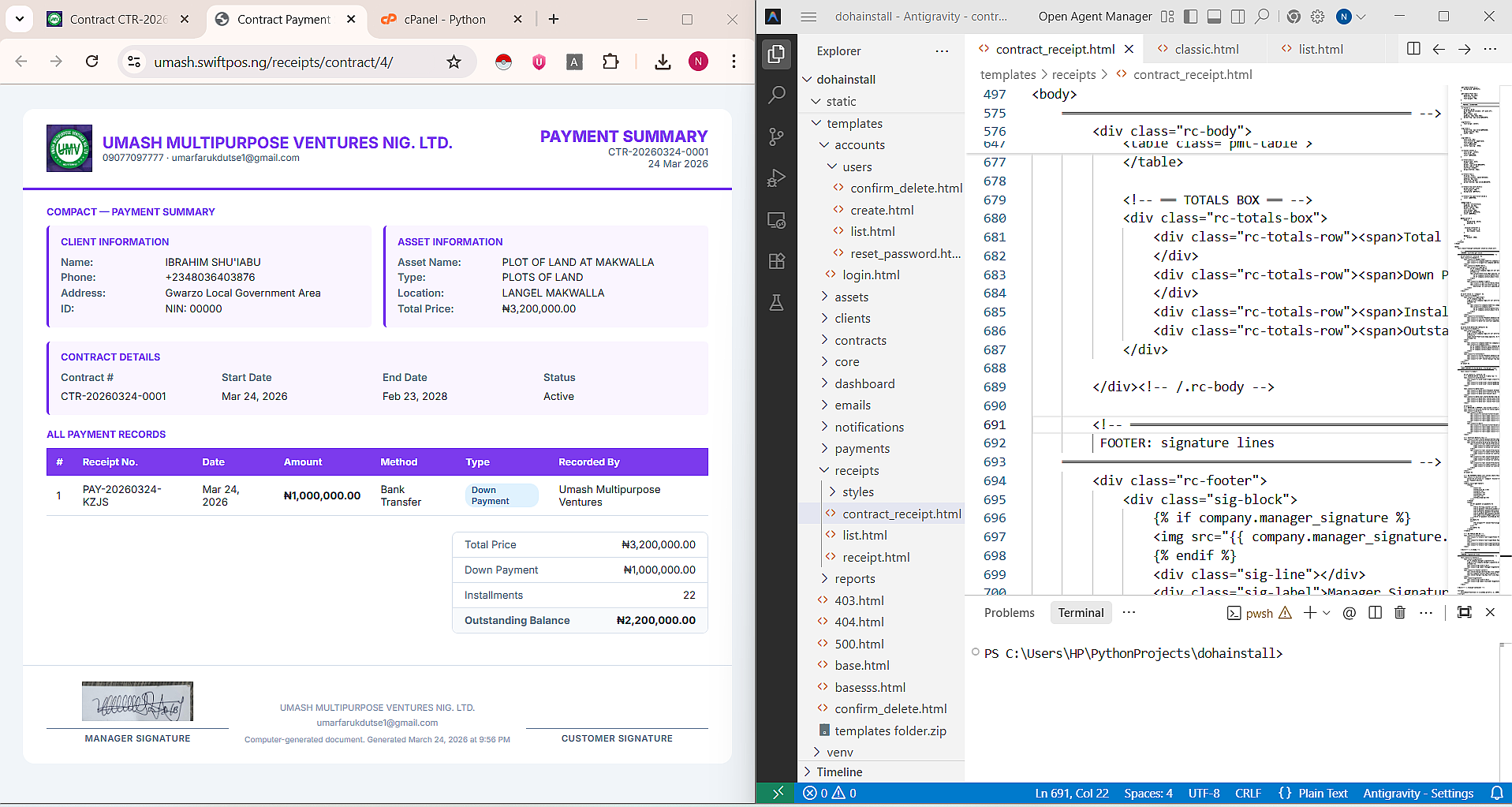
While SwiftPOS focuses on retail, Nura’s portfolio extends to complex billing and asset management through a platform called Payvo. Also Nura Mustapha Ali created Payvo (payvo.ng). The mission behind this startup is rooted in a belief that installment payment processing shouldn't be stressful, prone to manual math mistakes, or buried under unorganized Excel records. Payvo was born to simplify asset tracking and automate installment recovery.
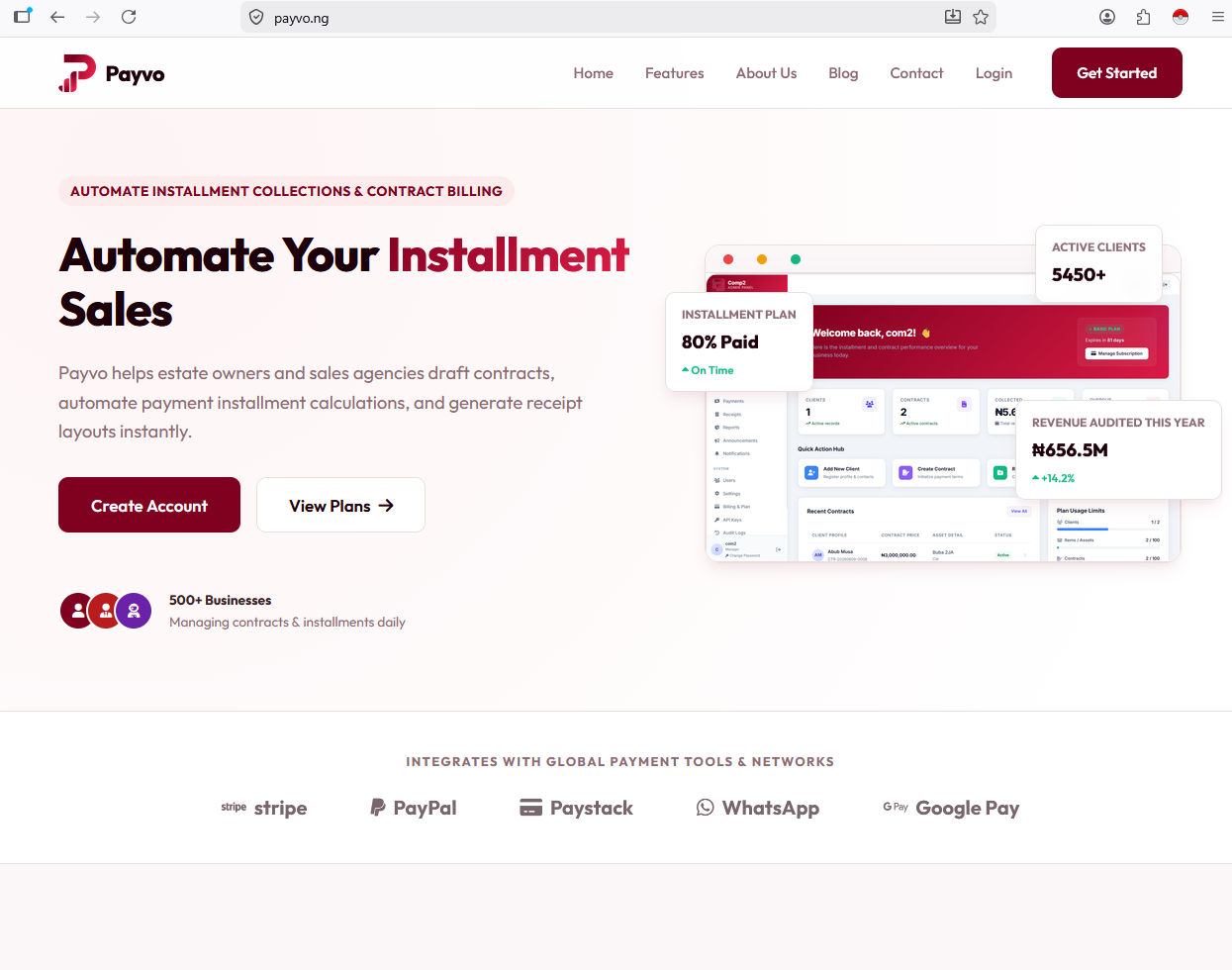
Many businesses in Nigeria, particularly those in real estate, education, and solar energy, rely heavily on installment plans. Managing these manually is a recipe for error. A missed payment can lead to a cascade of administrative issues. Payvo solves this by coordinating client portfolios, generating schedules, filing receipts, and managing agent funnels under a unified dashboard.
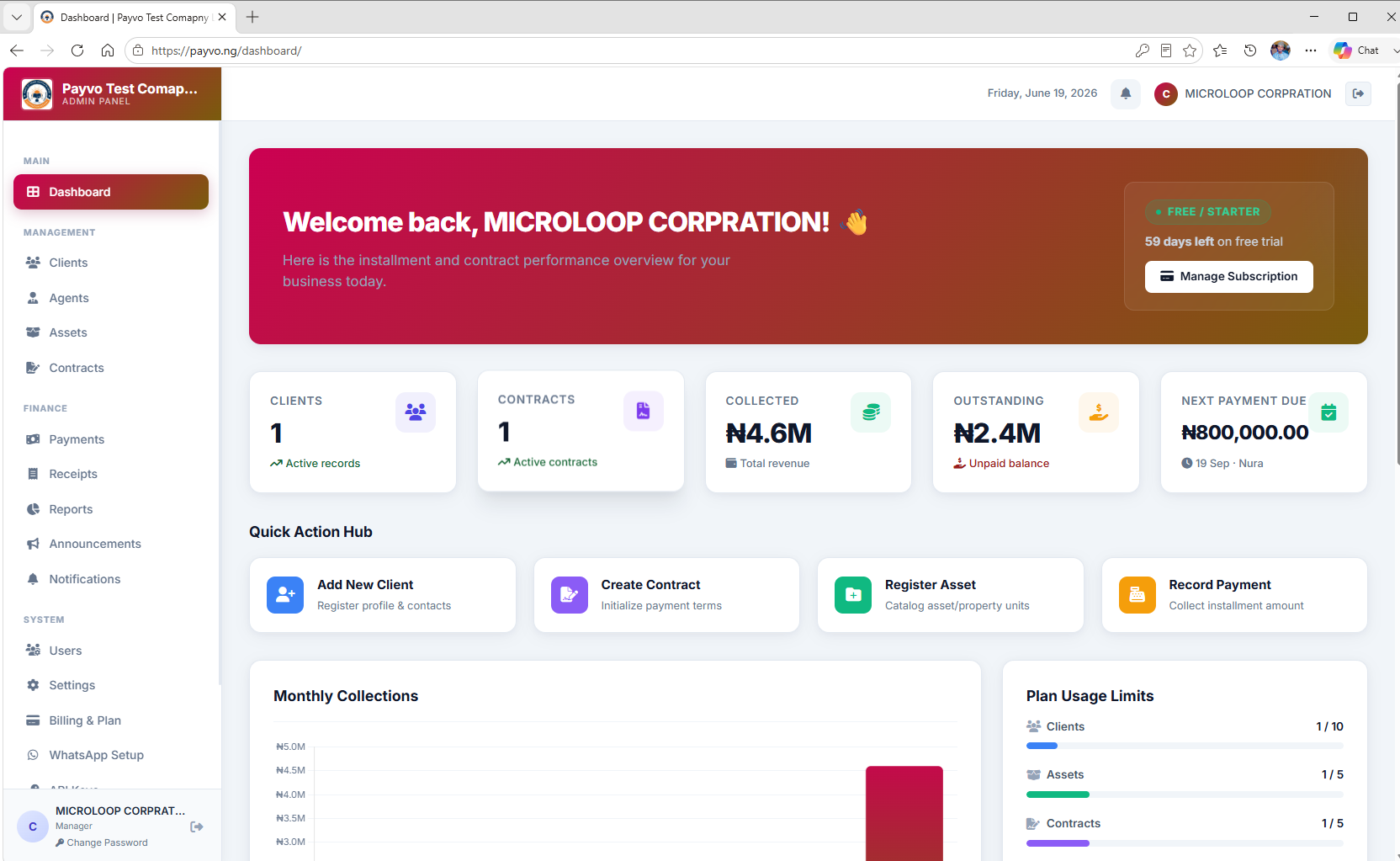
This integration allows Payvo to offer intelligent features, such as automated reminders for upcoming payments and predictive analytics on potential defaults. The system automates the recovery process, sending live emails and notifications to clients who are in arrears, thereby reducing the burden on the finance team.
Whether you manage real estate developments, automobile hires, education billing tables, or solar kit inventory, our platform coordinates client portfolios, generates schedules, files receipts, and manages agent funnels under a unified dashboard. The ability to manage these distinct business types under one roof is a significant competitive advantage. It reduces the need for multiple software subscriptions, saving businesses money while centralizing their financial data.
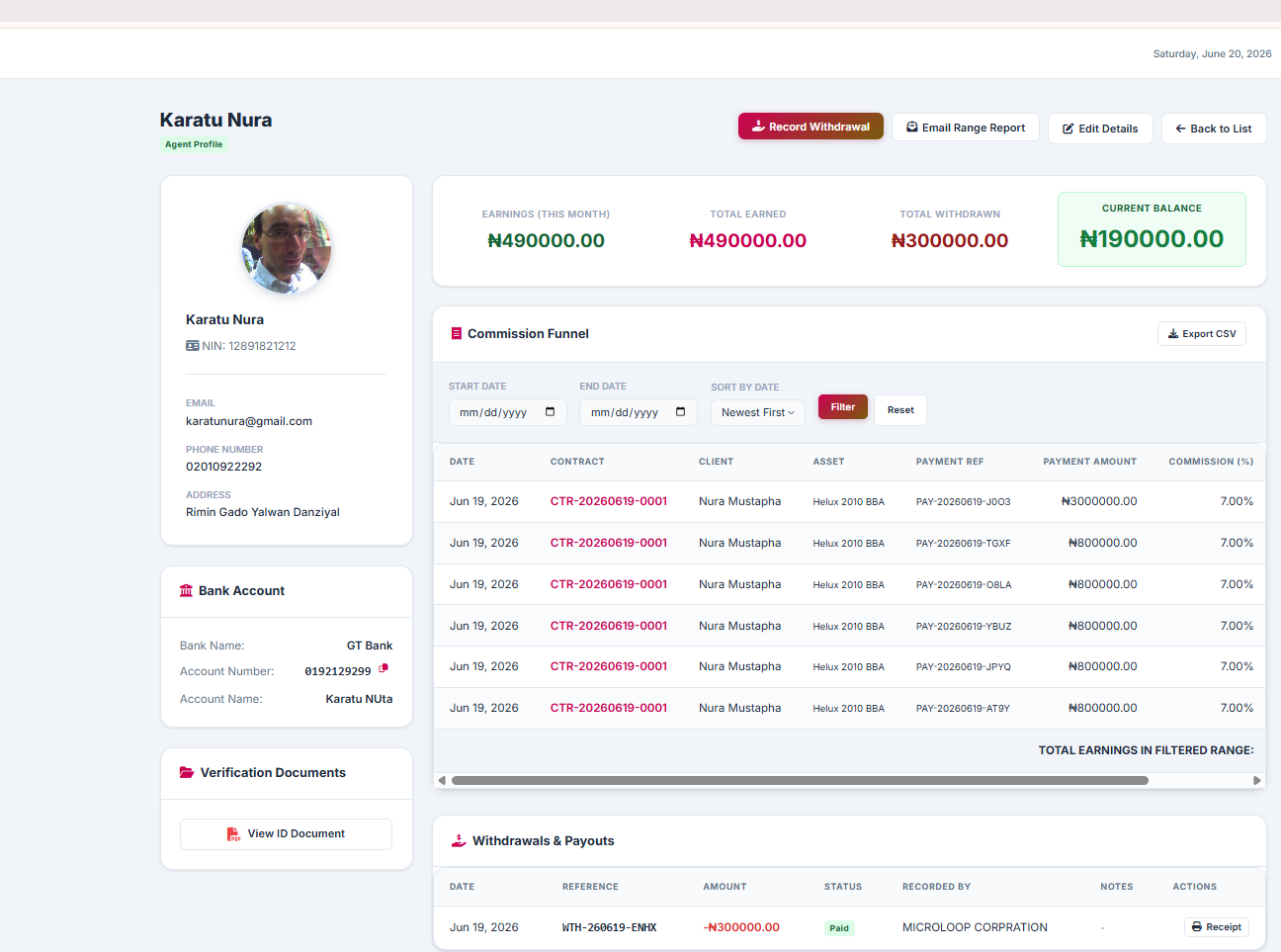
For a business owner looking to automate repetitive tasks, Payvo represents the solution to the "cash flow management" problem. By automating the collection and tracking of payments, the business owner gains access to capital faster, as the financial status is always visible in real-time. This level of financial clarity is critical for growth. Businesses that can predict their cash flow are better positioned to invest in marketing, inventory, and expansion.
Comparative Analysis: Manual Methods vs. Digital Solutions
To fully appreciate the impact of Nura’s startups, it is helpful to compare traditional manual methods against the capabilities of SwiftPOS and Payvo. The following table highlights the key differences in efficiency, accuracy, and scalability.
| Feature | Manual Methods (Excel/Books) | SwiftPOS & Payvo Solutions |
|---|---|---|
Data Entry | High risk of human error; prone to typos. | Automated validation; reduced error rate. |
Access Speed | Limited to physical location; slow retrieval. | Cloud-based; instant access from anywhere. |
Offline Capability | None (requires internet for digital tools). | SwiftPOS has native offline capabilities. |
Reporting | Time-consuming; requires manual aggregation. | Real-time dashboards and instant reports. |
Security | Vulnerable to physical loss or theft. | Encrypted data; audit logs; role-based access. |
Scalability | Difficult to expand beyond current capacity. | Scalable architecture supports multi-branch growth. |
Cost | Hidden costs (time, errors, lost cash). | Low operational overhead; high ROI. |
According to the Nigerian Bureau of Statistics, the efficiency of digital transaction systems has improved business turnover rates by approximately 40% in sectors that have adopted cloud-based POS systems. This statistic underscores the importance of the solutions offered by Nura Mustapha Ali. Furthermore, studies indicate that businesses utilizing automated billing systems recover 15% more debt compared to those relying on manual follow-ups. These data points highlight the tangible financial benefits of switching to the Nura ecosystem.
It is also worth noting the technical advantage. Nura’s decision to use Python and Django ensures that the code is open, maintainable, and secure. Unlike proprietary black-box software, Nura’s solutions are built with transparency in mind. This is a critical differentiator for business owners who want to understand exactly what is happening with their data. You can view the technical specifications and more details on the Services I Offered page to understand how these tools are deployed.
The Technical Edge: Why Python and Django Matter for Nigerian SMEs
The choice of technology stack is a strategic decision that impacts the longevity and performance of a software product. Nura Mustapha Ali’s preference for Python, Django, and MySQL over resource-heavy JavaScript frameworks is a deliberate move to optimize for the Nigerian environment. This decision addresses the reality of limited hardware
Share this article
Written by Nura Mustapha Ali
Software Developer & Tech Educator
Need help with a project?
Contact Me